
Key Takeaways
- A comprehensive eye exam covers far more than checking your vision clarity.
- Bring your current glasses, contacts, and a list of medications to your appointment.
- Several tests are done during an exam, from refraction to eye pressure checks.
- Dilation drops may affect your vision for a few hours after the visit.
- How often you need an exam depends on your age, health history, and risk factors.
You sit down, read a few letters off a chart, and walk out with a prescription. That’s what many people picture when they think of an eye exam. However, the truth is more complicated.
A comprehensive eye exam is a full medical evaluation of your eyes and visual system, designed to detect both vision problems and early signs of eye disease. If you’re visiting Vision One Boise for the first time, or just aren’t sure what to expect, here’s a clear walkthrough of the process.
What a Comprehensive Eye Exam Covers
A vision screening, like the kind done at a school or a driver’s license office, checks how sharp your vision is. That’s it. A comprehensive eye exam goes much further.
As part of an eye exam, your optometrist evaluates the health of your entire eye, from the surface to the back of the retina. This includes checking for early signs of conditions like glaucoma, macular degeneration, and diabetic eye disease, many of which have no noticeable symptoms in their early stages. In fact, comprehensive eye exams can detect over 270 health conditions, making them an important part of your overall health picture, not just your vision.
How to Prepare Before Your Appointment
What to Bring
A little prep before your visit helps the exam run smoothly and gives your eye doctor a clearer picture of your eye health history.
- Your current glasses or contact lenses, plus any written prescriptions you have
- A complete list of your medications and supplements, including dosages
- Your insurance card and any relevant medical history, especially family history of eye disease
Most comprehensive eye exams take between 30 and 60 minutes, so you can plan your day accordingly.
The Key Tests Done During an Eye Exam
Vision and Refraction Tests
These are the tests that most people recognize. A visual acuity test measures how clearly each eye sees at a distance, typically using a letter chart. A refraction test determines the lens prescription you need, whether that’s for glasses, contacts, or both.
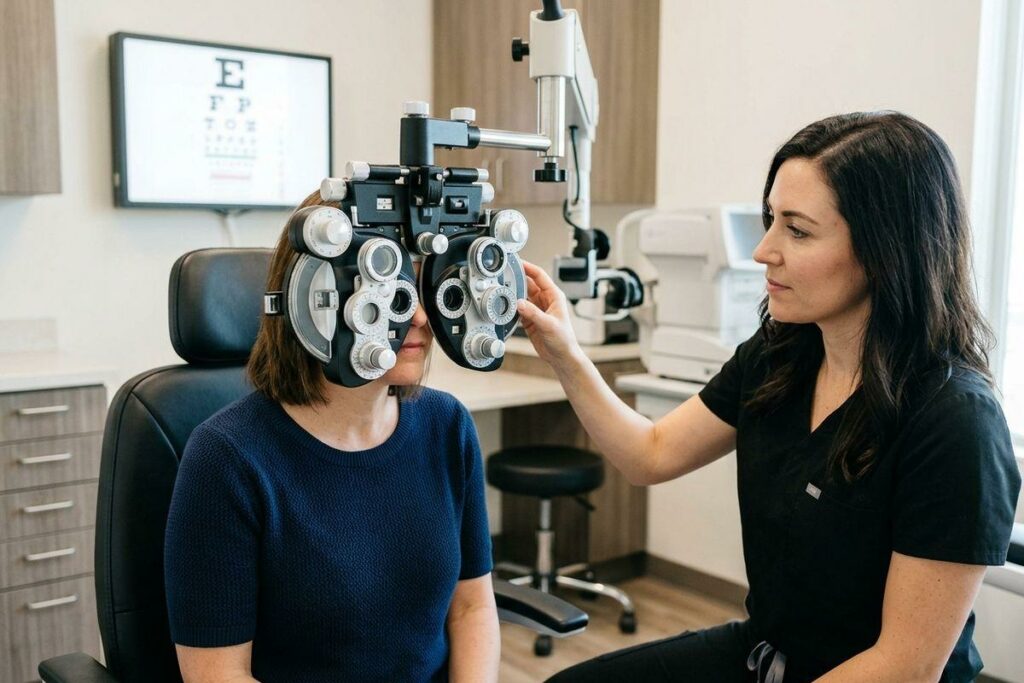
As part of this process, your eye doctor will use a device called a phoropter. This is the large lens-flipping instrument that you look through while your eye doctor asks questions like, “which is clearer, one or two?” Your responses help determine your prescription, so take your time and answer honestly.
Eye Health Screenings
Beyond vision, your eye doctor will also check several markers of eye health. These include:
- Intraocular pressure, measured to screen for glaucoma risk
- The retina and optic nerve are examined using a slit lamp or other imaging tools
- Eye movement, alignment, and how your pupils respond to light
These screenings give your eye doctor a thorough look at how your eyes function and whether any signs of disease are present. Tools like optical coherence tomography can produce detailed cross-section images of the retina, helping to detect conditions like glaucoma and diabetic eye disease long before symptoms develop.
Pupil Dilation: What It Is and What to Expect
While not every visit requires pupil dilation, it’s still something that you should be aware of. Pupil dilation involves your eye doctor placing drops in your eye in order to temporarily widen your pupils. This allows them a clearer view of the structures at the back of the eye.
The drops take about 20 to 30 minutes to take full effect. During that time, and for a few hours after, you may notice blurry near vision and sensitivity to bright light. This is normal and temporary. We recommend bringing sunglasses and planning your ride home, as driving can be dangerous with dilated pupils.
How Often You Should Get Your Eyes Checked
By Age and Risk Level
Frequency recommendations vary based on your age and health profile.
- 5-18: Every 1-2 years, depending on risk factors
- 18–40: At least every 2 years
- 40–64: At least every 2 years
- 65+: Annually
- Those who wear contact lenses: Annually
- Those with diabetes, a family history of glaucoma, or other risk factors: Annually
Why Regular Exams Matter Even with Good Vision
Good vision doesn’t mean that your eyes are problem-free. Many of the most serious eye conditions, including glaucoma and macular degeneration, develop without any pain or noticeable vision changes until permanent vision loss has already occurred. Routine exams help detect these conditions before they affect your day-to-day life.
At Vision One Boise, we offer comprehensive eye exams for every member of your family, from young children to adults managing chronic health conditions. If it’s time for your next exam, or if you’re due for one and haven’t scheduled yet, reach out to our team to book your appointment.